Animals
In the “Carnivores” sector, you can observe 26 species of large and small carnivores. The impressive big cats are housed in the “Big Cats, Terrarium and Aquarium” Hall. This is where tigers, lions, jaguars, Persian leopards, and snow leopards live. They also have access to spacious, renovated outdoor enclosures. The mysterious kinkajou and two groups of meerkats can also be seen in the hall.
The inhabitants of the recently renovated “Small Carnivores” exhibit—including mongooses, servals, caracals, jungle cats, raccoons, coatis, honey badgers, European badgers, American mink, Asian small-clawed otters, and others—now enjoy more spacious and well-equipped enclosures. Nearby are the enclosures of the wolves and Eurasian lynx. The bear complex is home to Eurasian brown bears, grizzly bears, sloth bears, striped hyenas, and jackals.
The “Herbivores” sector is the largest by area, occupying more than half of the zoo’s territory, and is home to 28 animal species. The “Giants” Hall houses two Asian female elephants, a white rhinoceros, and two species of hippopotamus – the common hippopotamus and the pygmy hippopotamus. In the sector’s spacious enclosures throughout the zoo, visitors can see Mishmi takins, zebras, two species of kangaroos, sika deer, antelopes, American bison, domestic yaks, ponies, Bactrian camels, collared peccaries, and others.
The “Primates” sector houses 13 primate species in three separate halls. The outdoor enclosures in the sector were fully реконstructed in 2020 and are among the most modern on the Balkan Peninsula. The newest residents of the sector are a group of Angola colobus monkeys. Other rare and valuable primates living in the sector include lar gibbons, siamangs, lion-tailed macaques, ring-tailed lemurs, Macaque Rhesus, Hanuman langurs, golden-handed tamarins, marmosets (the smallest monkeys in the world), and Brown capuchins.
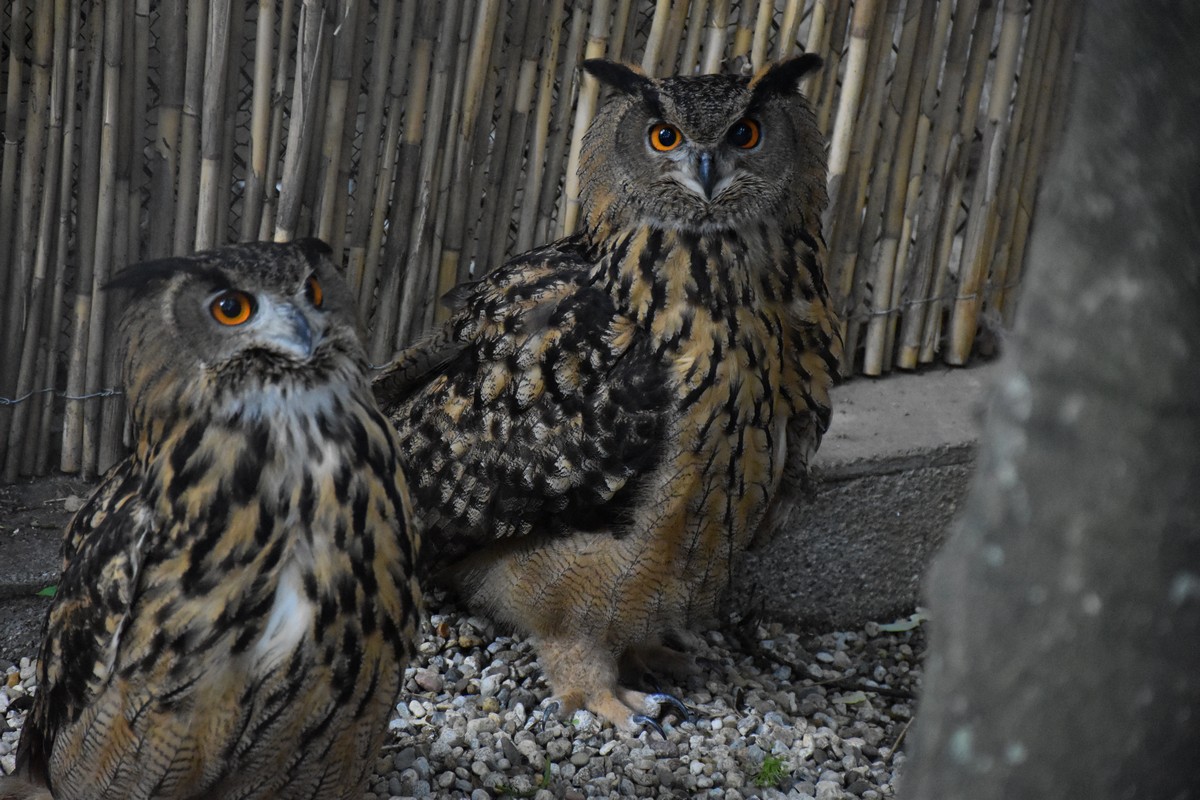
The “Birds” sector is home to 50 bird species from around the world. The sector includes the Pheasantry, which houses parrots, hornbills, ibises, pink flamingos, kookaburras, diurnal and nocturnal birds of prey, as well as species of particular importance to Bulgarian wildlife, such as Egyptian vultures and lesser kestrels. The Large Aviary for Birds of Prey is home to golden eagles, griffon vultures, and cinereous vultures. The lake for waterfowl hosts three species of swans, two species of pelicans, geese, and ducks. Flightless (running) birds are represented by ostriches, rheas, and emus.
Reptiles and amphibians are presented in the zoo’s terrarium, located in the “Big Cats, Terrarium and Aquarium” Hall. Reptiles are represented by 34 species from around the world, including an alligator and a Nile crocodile, impressively large snakes, monitor lizards, turtles, and others. Amphibians are represented by the African bullfrog. The animals are exhibited in renovated and modern terrariums and aquaterrariums.
Amphibians are presented in the zoo’s terrarium, located in the “Big Cats, Terrarium and Aquarium” Hall. The amphibians are represented by the African bullfrog.
Fish can be seen in the aquarium, located in the “Big Cats, Terrarium and Aquarium” Hall. There you can observe over 50 species of freshwater fish from river basins around the world. Among them are the critically endangered European eel, as well as remarkable species such as the red piranha, pterygoplichthys, and the African lungfish (Protopterus).
There is also a marine aquarium, inhabited by clownfish and other marine animals.